



Recommended Visits in Corfu
🎓 Welcome to Corfu!
Dear educators and students, Corfu welcomes you! The following guide was created specifically for schools visiting the island, aiming to help you use your free time constructively. The texts contain rich historical information, while for each point a pedagogical proposal for discussion is provided, along with practical information. Enjoy your tour!
🏘️ Old Town of Corfu (UNESCO Monument)
The Old Town retains almost the entirety of its historical residential fabric, with buildings from the 17th-19th centuries, highlighting the particular historical circumstances that shaped it. Together with the two fortresses (Old and New), it belongs to the UNESCO World Heritage Monuments (2007). The “statement of outstanding universal value” notes that due to its strategic position at the entrance of the Adriatic, the city received a multitude of influences and constitutes a unique blend of different human settlements and fortification art.
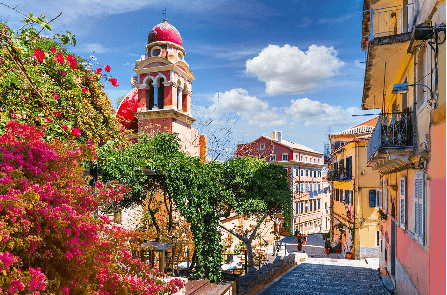
Ask students to identify differences in architecture and discuss how geography and the sea influence the history and culture of a place.
🏰 Old Fortress
Located on the twin-peaked rocky end of the city, this is a Venetian fortress of the 15th-16th century. Communication with the city is via a 60m iron bridge over the moat (contra-fossa). Inside, the Martinego and Savorgnan bastions are distinguishable, as well as the impressive gate by architect Sanmichelli. Besides the Venetian fortifications with the Lions of St. Mark, there are also buildings from the English period. Today it houses the Prefecture Archives, the Public Library, departments of the Ionian University, while events take place in the “Versiada” area.
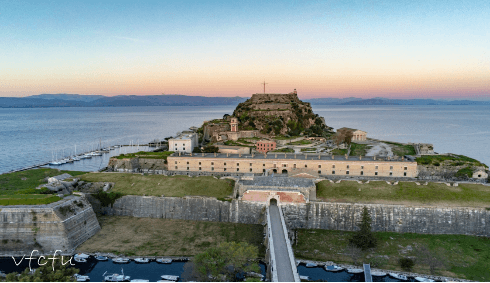
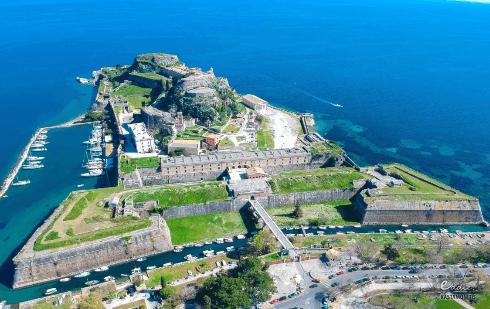
Discuss defensive architecture (moat, bastions) and how old military spaces can be repurposed today for culture and education.
🛡️ New Fortress (Fortezza Nuova)
A robust structure on the hill of St. Mark, above the Old Port. Built by the Venetians (1576-1645) under architect Francisco Vitelli, who had to demolish over 2,000 houses and churches to find materials. It is built on two levels to control the port and the hinterland. It suffered many blows (in 1864 before the Union and in WWII). Its gate is decorated with a magnificent relief Lion of Venice. The view from the top is unique.
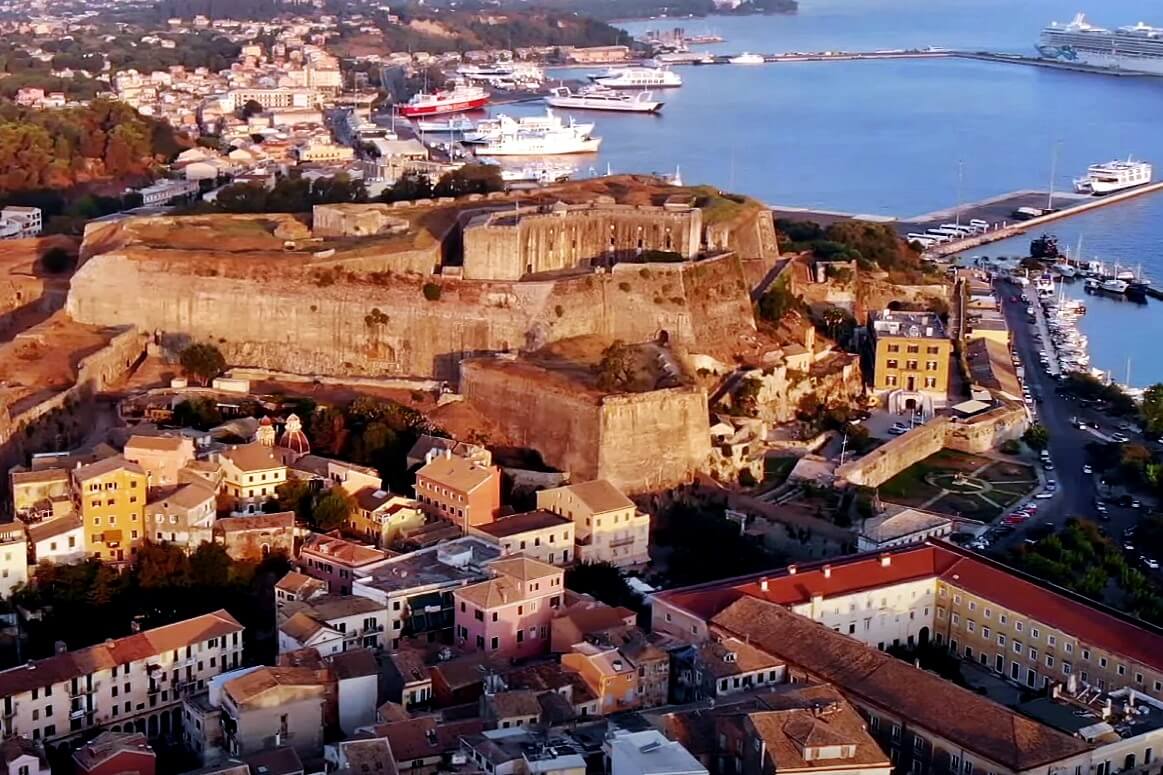
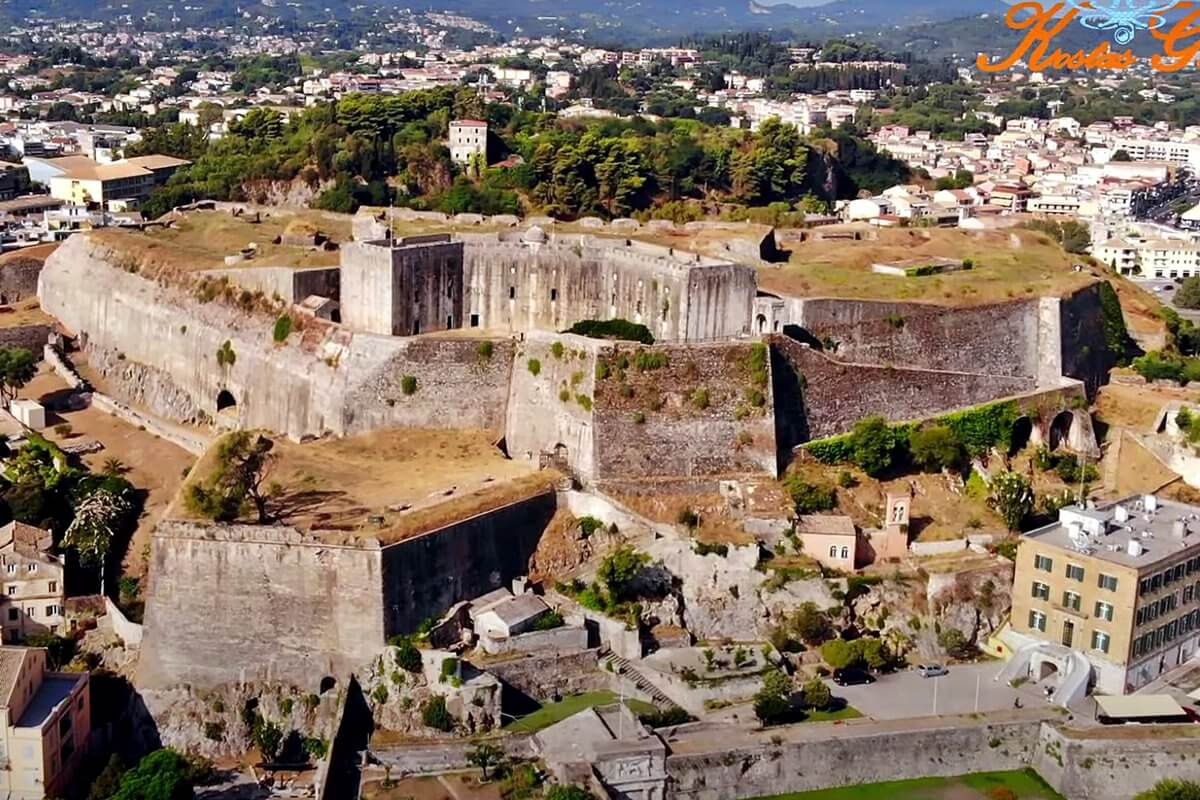
Pose the dilemma: “Security vs. Housing”. Is the sacrifice of 2,000 houses worth building a fortress? How does war affect the urban fabric?
🎭 Old Town Hall (San Giacomo Theatre)
Built in 1691 as a club for Venetian nobles (Loggia di Nobili) and converted into a theatre in 1720 named “San Giacomo”. It was the first theatre in the Greek territory and a center of Greek opera, attracting Italian musicians. Antonio Vivaldi rehearsed his operas here (e.g., Juditha Triumphans in 1716). It functioned as the center of the Ionian School of Music until 1892. Converted into a Town Hall in 1903, it remains one of the most elegant buildings.
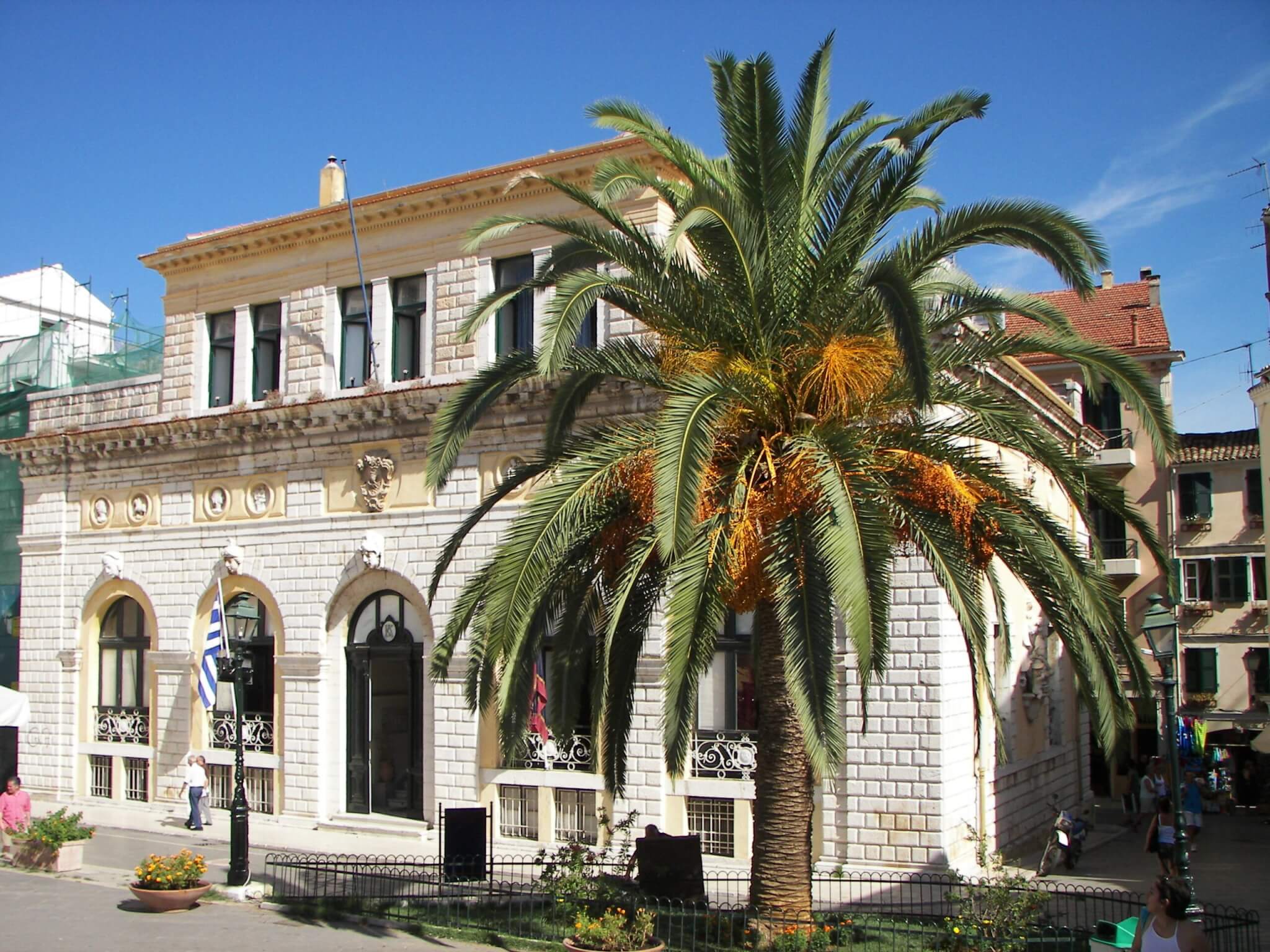
Talk about the history of Opera in Greece. How did art start as a privilege of the nobles and become a possession of the people?
⚖️ Ionian Parliament
History was written in this neoclassical building, as the Union of the Ionian Islands with Greece was voted here in 1863. The building exudes Doric simplicity and seriousness. Today it operates as a branch of the Gallery and a venue for selected events, preserving the memory of 19th-century parliamentary procedures.
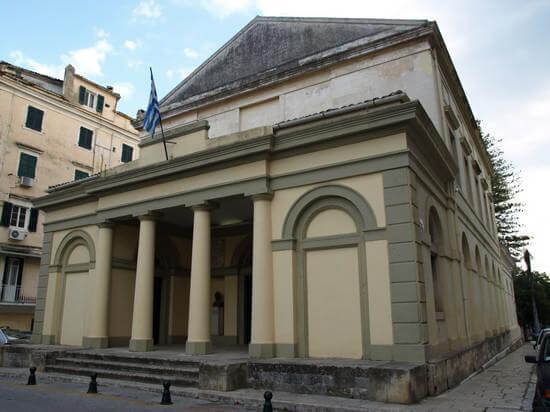
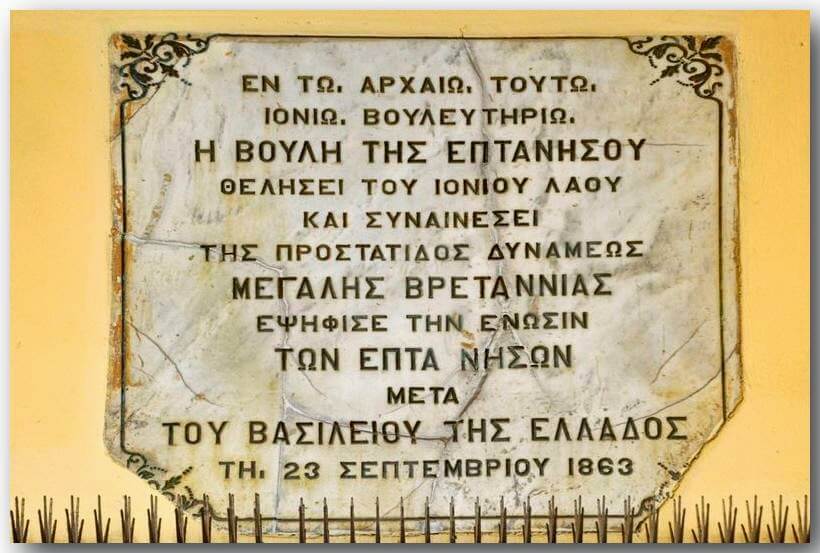
Opportunity for a political history lesson: What does parliamentarianism mean? What is the significance of the 1864 Union for the Greek territory?
🎓 Ionian Academy & Grimani Barracks
The building was originally constructed in the 17th century as Venetian barracks (Quartiere Grimani). In 1824, Lord Frederick North Guilford founded the Ionian Academy here, the first university of modern Greece, with 4 faculties and a rich library from donations by Oxford and Cambridge. After the Union, it housed the Public Library, which burned down in 1943. Today it houses the Rectory of the Ionian University.
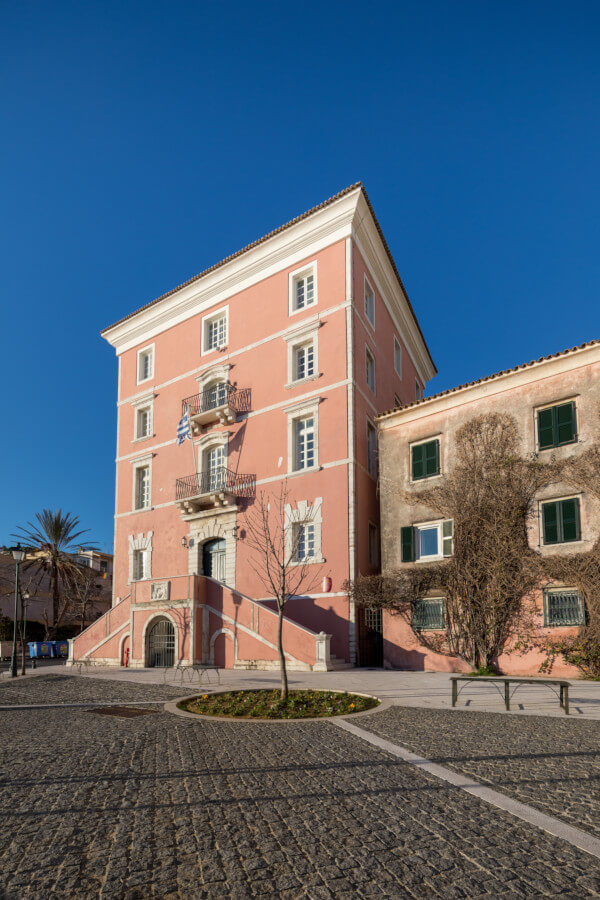
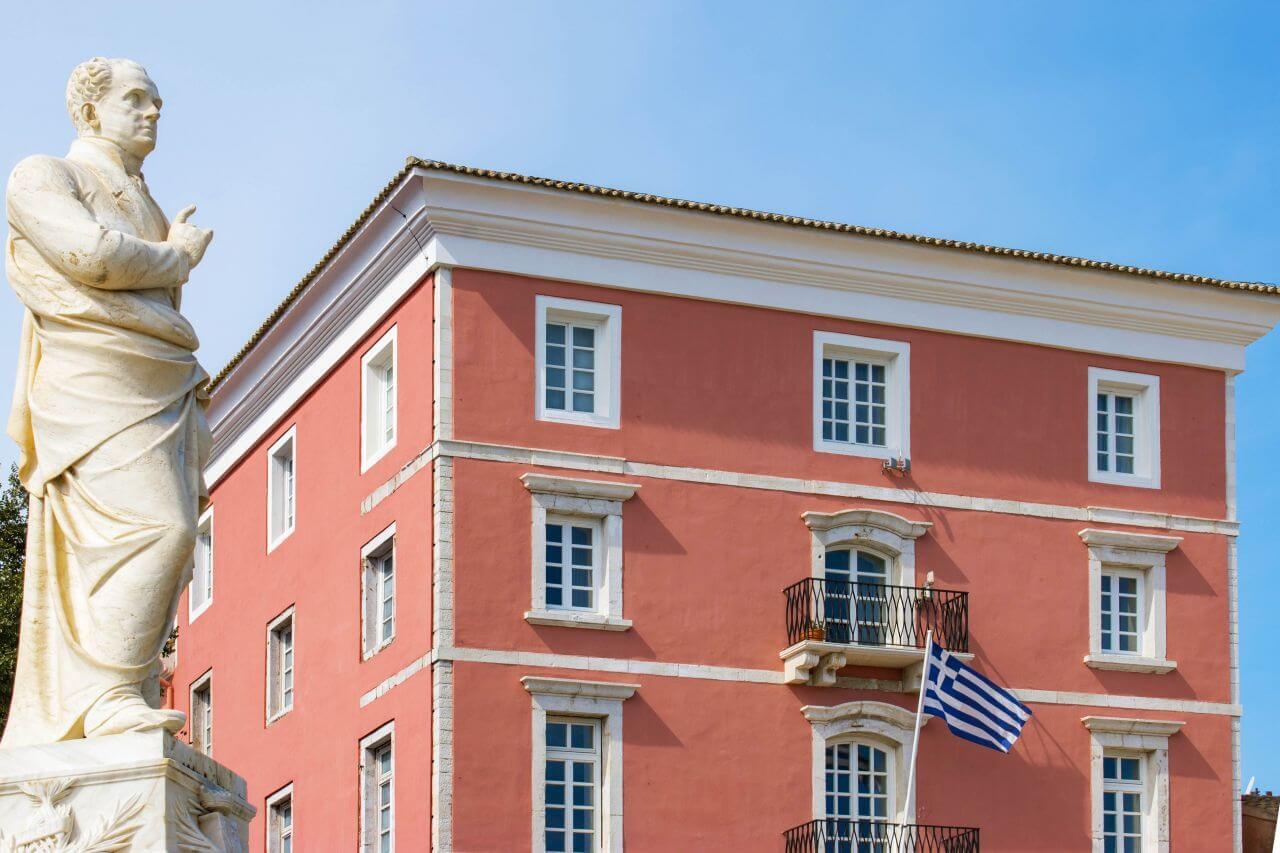
Discuss the value of Higher Education. How important was it to have a University in Greece
🛥️ Vido Island & Serbian Mausoleum
The ancient Ptychia (now Vido, from the owner Guido) is an islet of one square kilometer. It was a place of prisons, but today it is a sacred place of memory. The Mausoleum houses the bones of Serbian soldiers who died in Corfu (1915-1918) from cholera and hardship when the Serbian army and King Peter found refuge on the island. Serbs visit it often for memorial services.
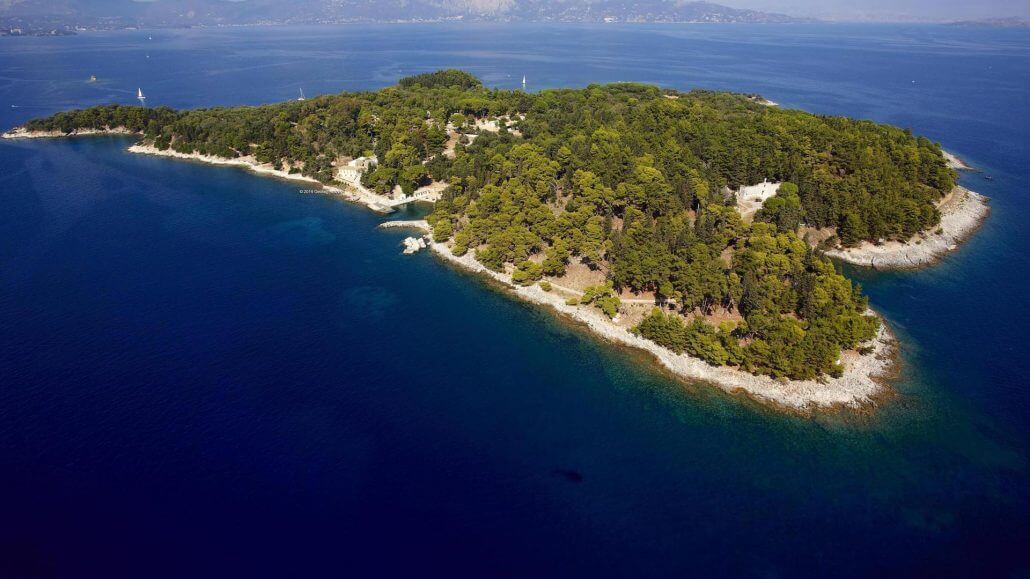
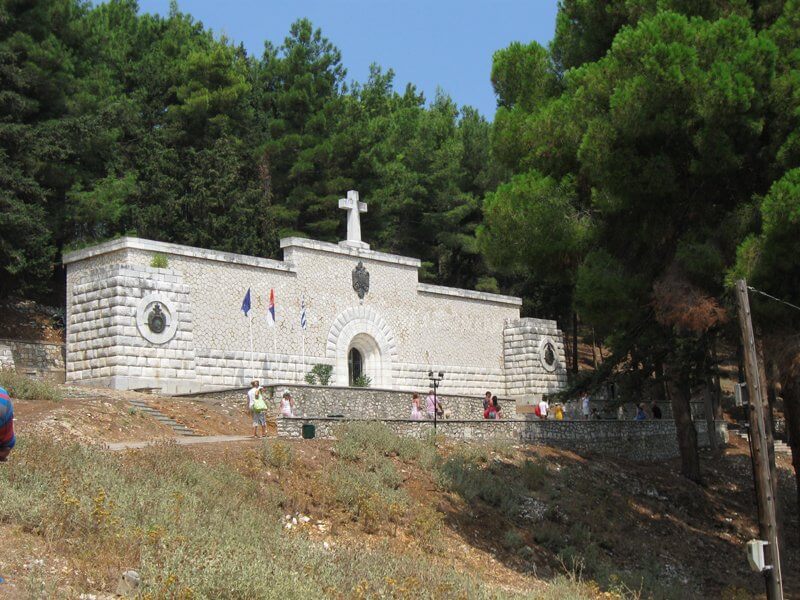
Lesson on modern history: Refugees, war, and Greek-Serbian friendship. What emotions does visiting a mausoleum evoke?
🏯 Palace of St. Michael & St. George (Asian Art)
Built between 1819-1824 by High Commissioner Thomas Maitland in Regency style, designed by George Whitmore using Maltese stone. It housed the Order of St. Michael and St. George. The interior is decorated with sculptures by Pavlos Prosalentis. You will be impressed by the Ballroom with the Pantheon-type dome and the Throne Room. Today it hosts the unique Museum of Asian Art in Greece with 11,000 artifacts from China, Japan, India, Pakistan, etc.
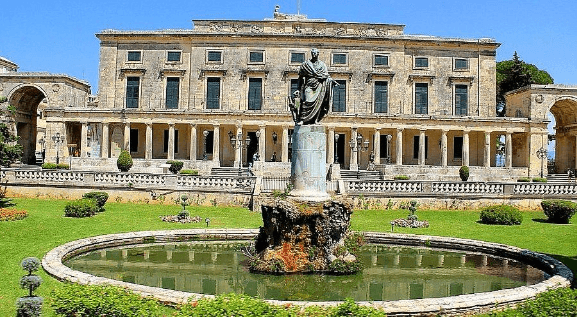
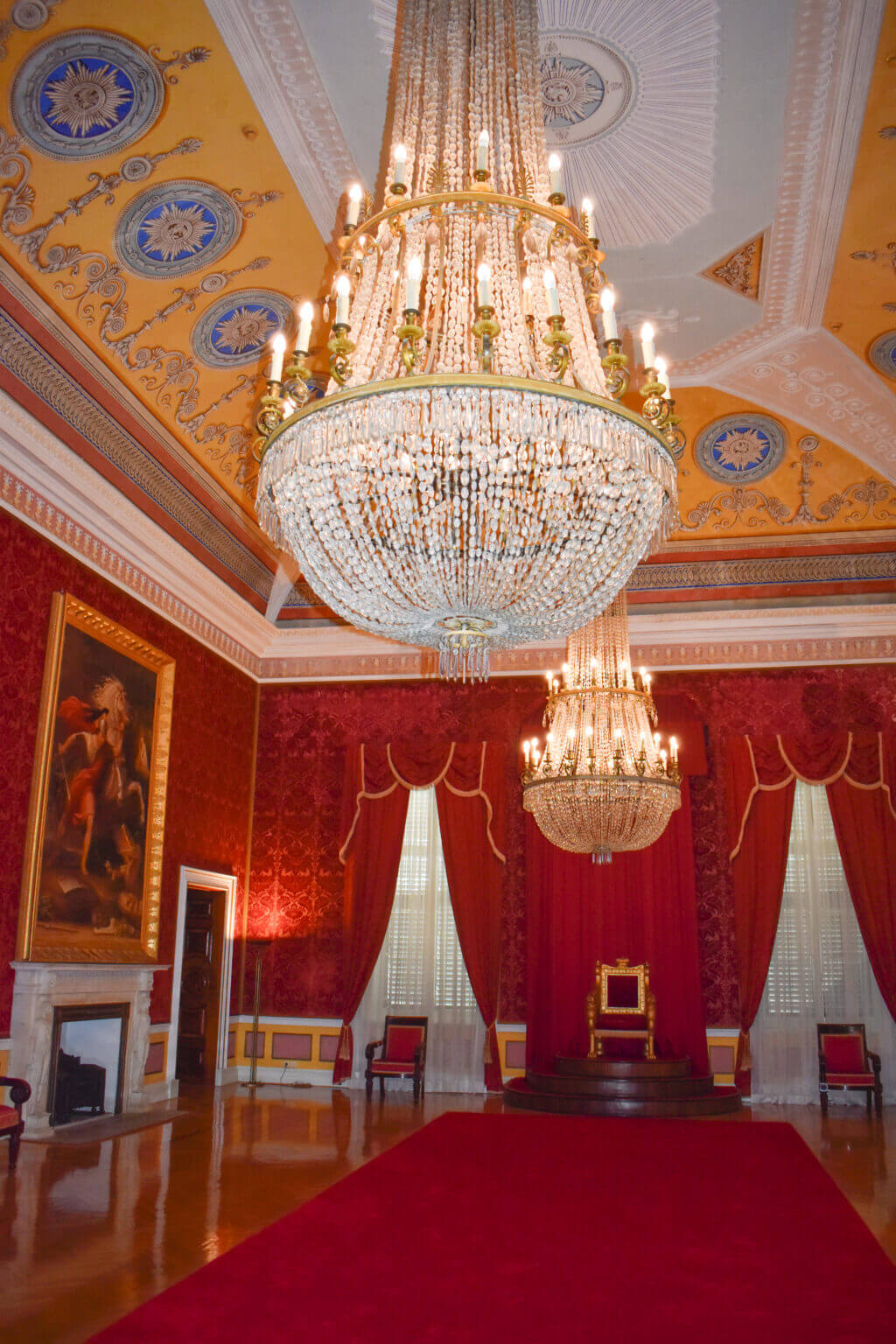
Introduction to intercultural education. Compare Eastern art (e.g., Chinese vases, Samurai) with Western art.
🏺 Archaeological Museum of Corfu
Presented its new exhibition in 2018 with over 1,600 objects from the ancient city and the island. The most important exhibit is the monumental pediment of the temple of Artemis (c. 580 BC) depicting the Gorgon with her children. It is considered the oldest surviving stone pediment of ancient Greek architecture. The collection covers the course from the prehistoric period to late antiquity.
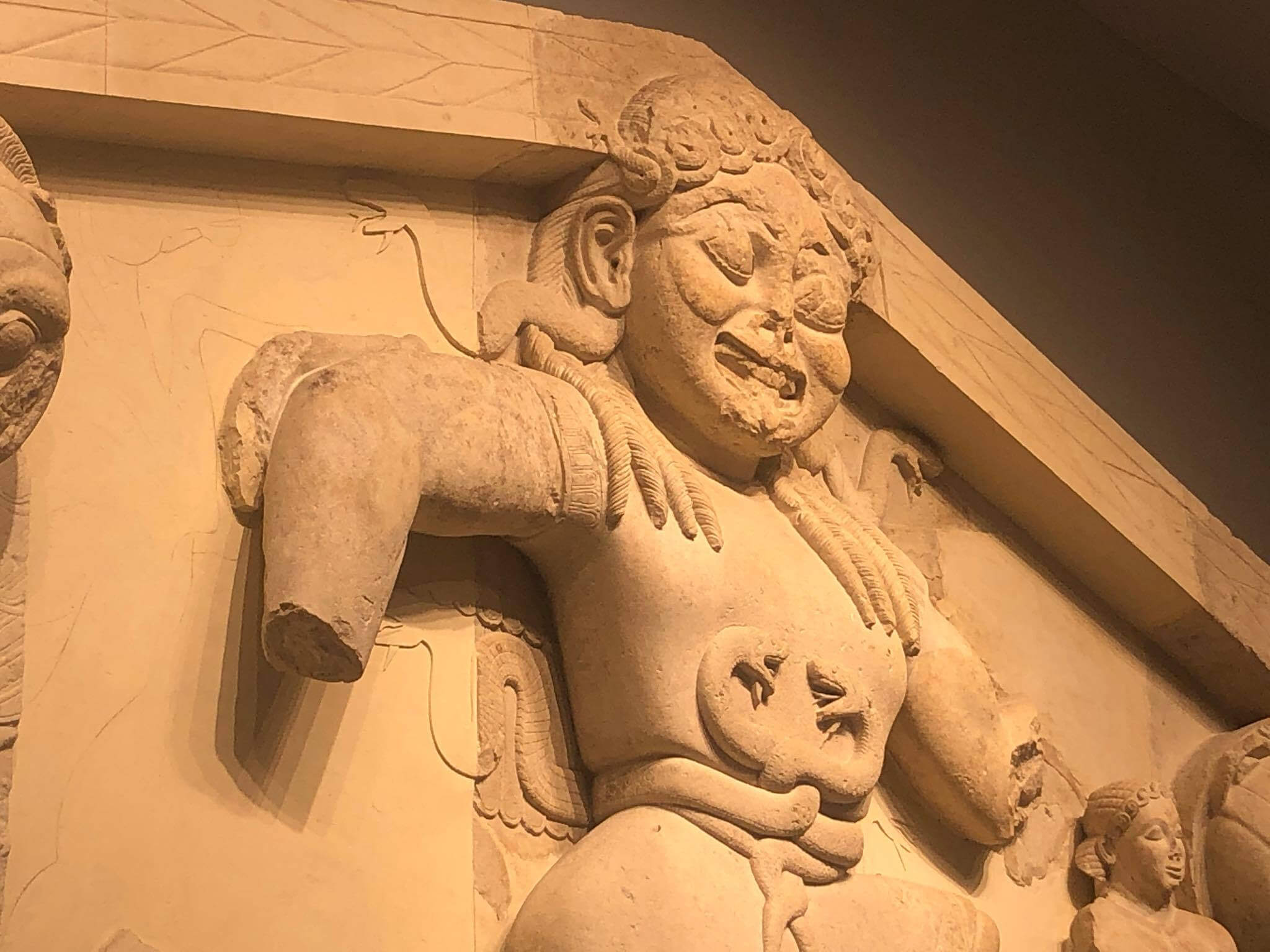
Analyze the myth of Medusa/Gorgon. Why did the ancients put scary figures on their temples? (Apotropaic character).
🎺 Museum of the Philharmonic Society (“Old”)
The Philharmonic Society of Corfu was founded in 1840 and is the oldest music educational organization in Greece. The museum honors Nikolaos Chalikiopoulos Mantzaros (1795–1872), the first artistic director and composer of the National Anthem. Through rare scores, instruments, and documents, it shows how Corfu became the “cradle” of art music in the Ionian Islands and Greece.
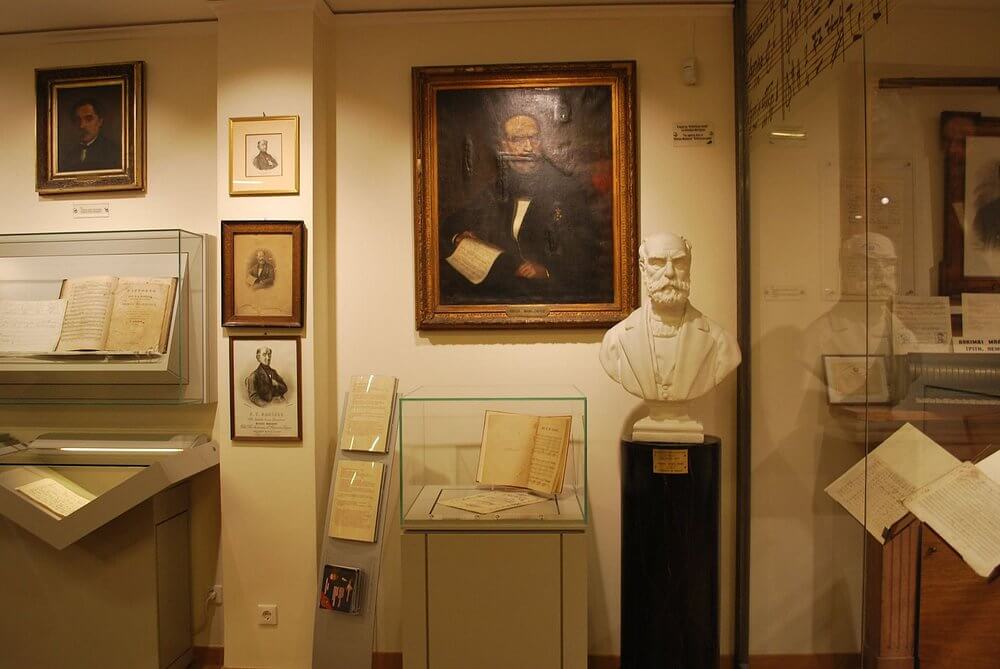
Discuss the National Anthem and the importance of musical education. How do Philharmonic bands keep the local society connected?
🕰️ Casa Parlante – The Living Museum
Housed in a 19th-century neoclassical mansion in the Old Town. It recreates the daily life of the nobles (counts) using robotic figures (animatronics) and faithful decoration. It is a multi-sensory experience: you will see the children playing music, the Count reading the newspaper, you will hear sounds and smell the aromas from the cook’s pot. It offers the real picture of another era.
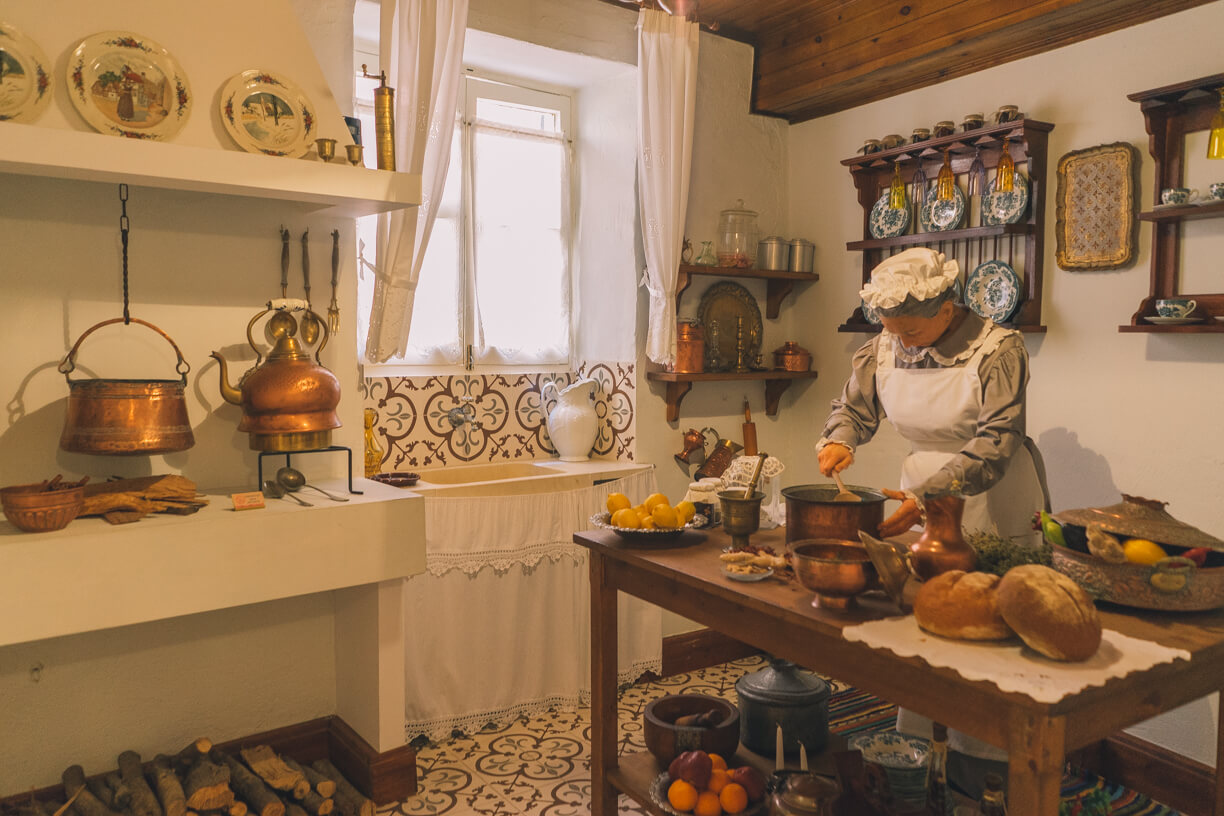
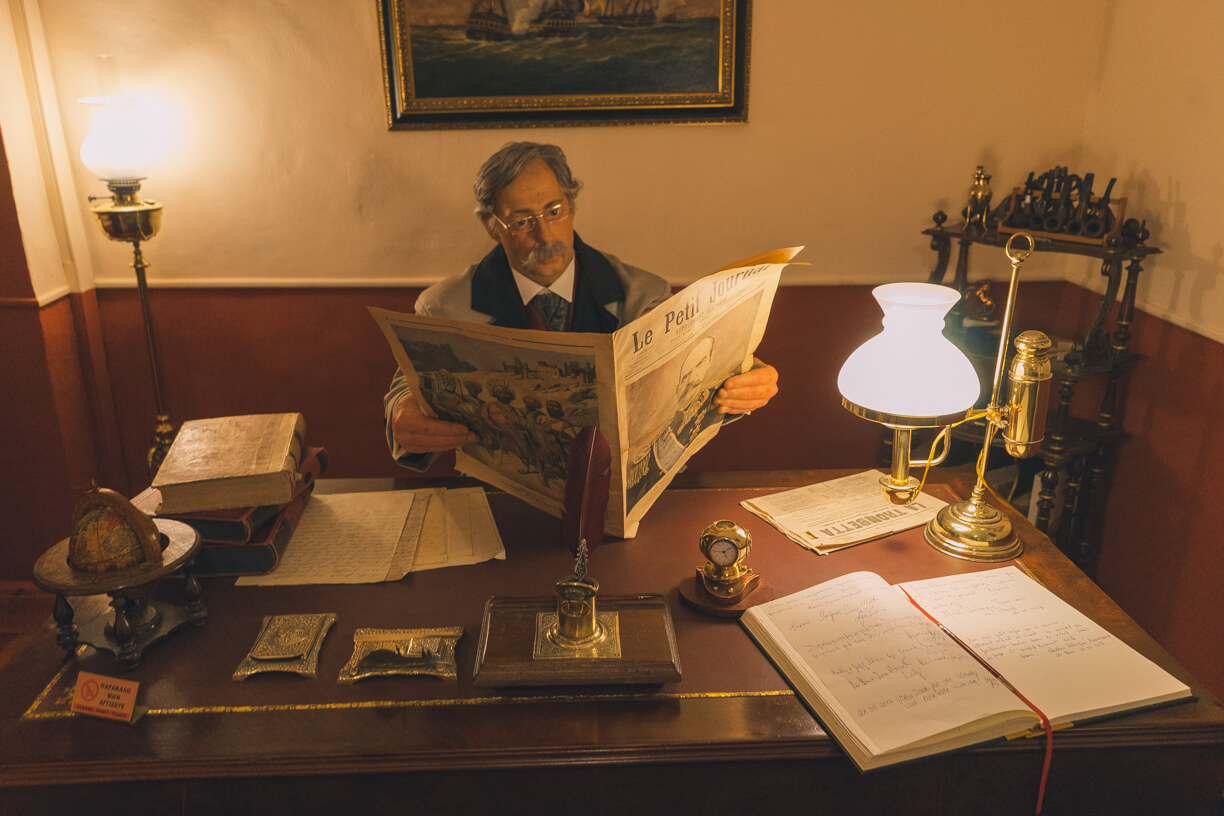
Folklore lesson: Compare the life of 19th-century nobles with today. How have family structure and technology changed?
✍️ Dionysios Solomos Museum
This is the residence where the national poet Dionysios Solomos lived his most productive years (1828-1857). Here he wrote the “Free Besieged” and the “Cretan”. It functions as the seat of the Society of Corfiot Studies and preserves his desk, personal items, manuscripts, and photographs. The Society was founded in 1952 by intellectuals of Corfu for the research of Ionian literature.
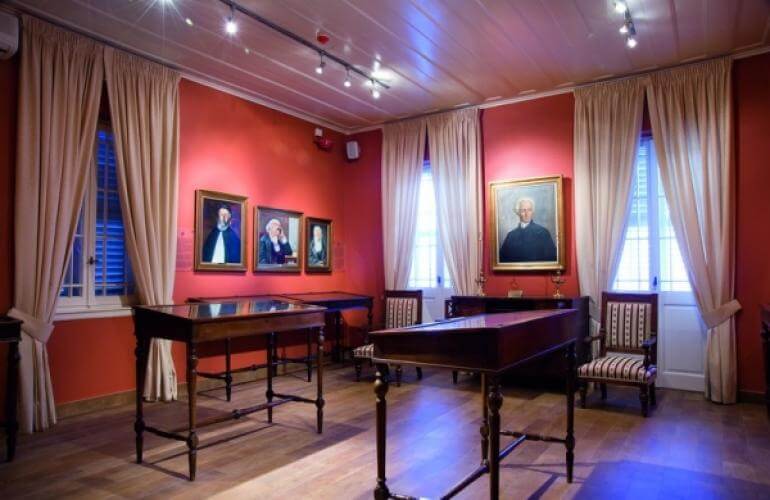
Connect the visit with Literature class. Read excerpts from Solomos’ works in the space where they were written.
📖 Reading Society of Corfu
The oldest intellectual institution of modern Greece, founded in 1836 by young Corfiot scientists (Solomos, Kalvos, Kapodistrias were among the members). It is housed in a characteristic building opposite the Palace. Its library is unique, with rare editions from the 16th century, newspapers, maps, and the “Ionian Library”. It has been awarded by the Academy of Athens and Europa Nostra.
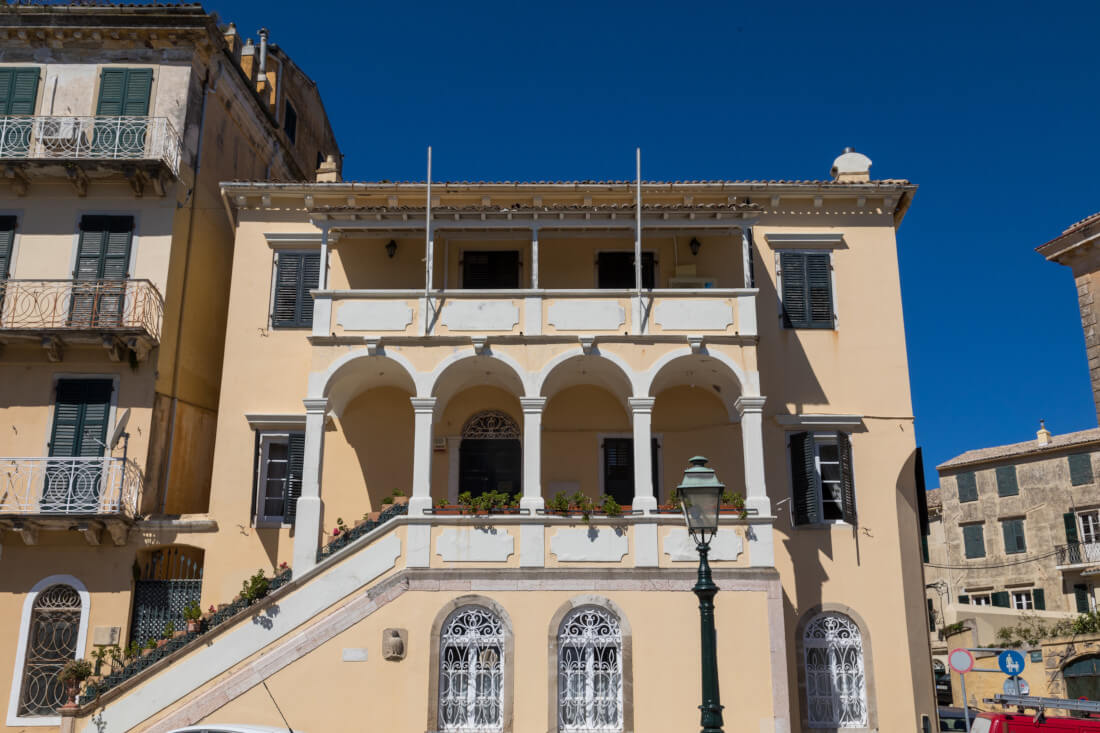
Discuss the value of Libraries and Archives. How do we keep knowledge and history alive through documents?
📜 Kapodistrias Museum (Koukouritsa)
The only museum dedicated to Ioannis Kapodistrias, the first Governor of Greece. It is housed in “Koukouritsa”, the historic country house of the family, which was donated by his great-grandniece and Mayor of Corfu, Maria Kapodistria-Desylla. The permanent exhibition includes personal items and documents that shed light on his diplomatic career in Europe and his work in Greece, within a magnificent garden.
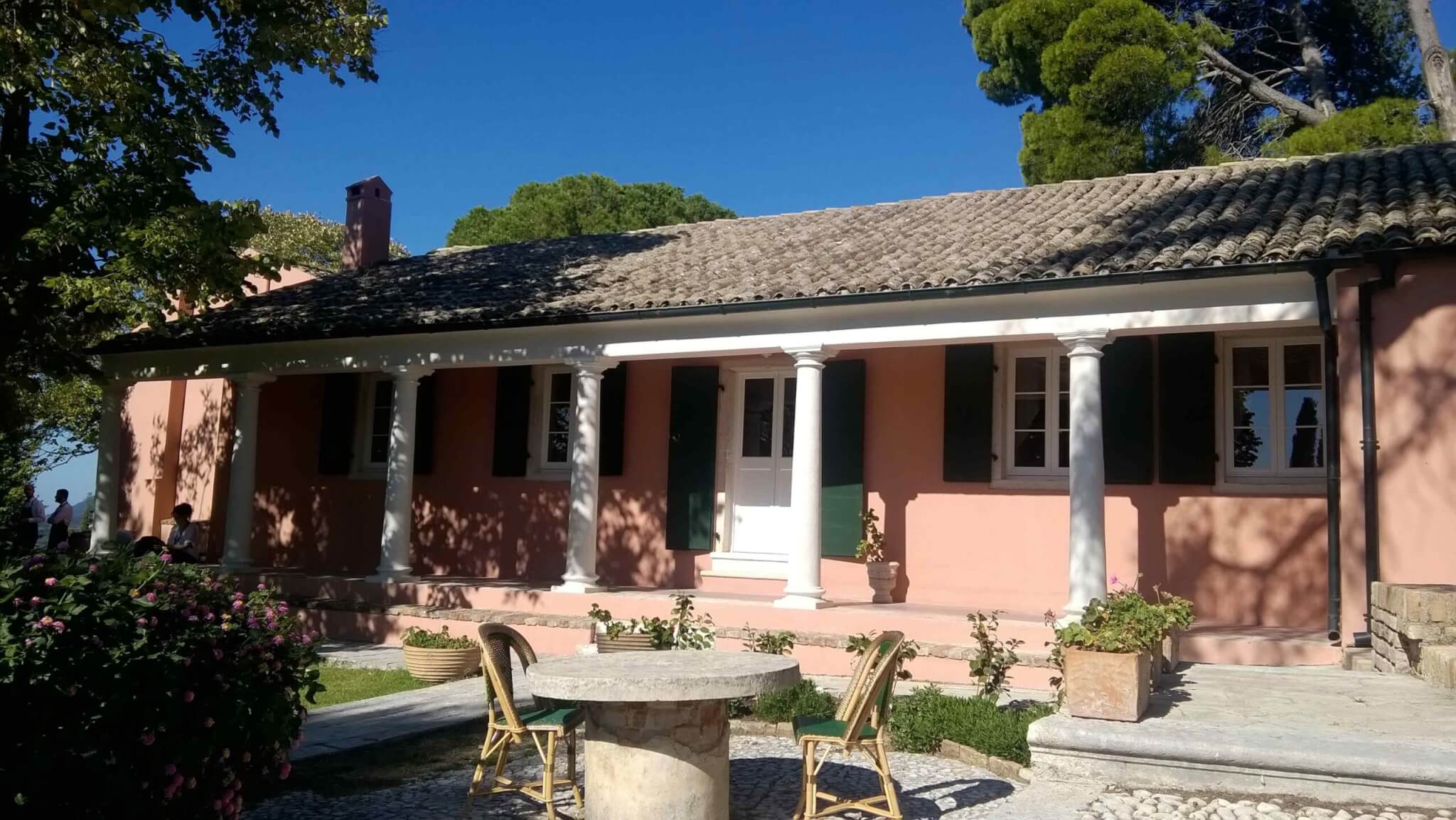
Study Kapodistrias’ personality. What characteristics made him a great leader and diplomat?
🌳 Spianada Square (Spianada)
The largest square in the Balkans! Its name (from Italian spianare=to flatten) reveals its history: it was formed by the Venetians by demolishing buildings to have a clear field of fire from the Fortress. Today it is a social center, combining greenery, the Maitland Peristyle (Rotunda), and the only cricket ground in Greece, a remnant of British rule.
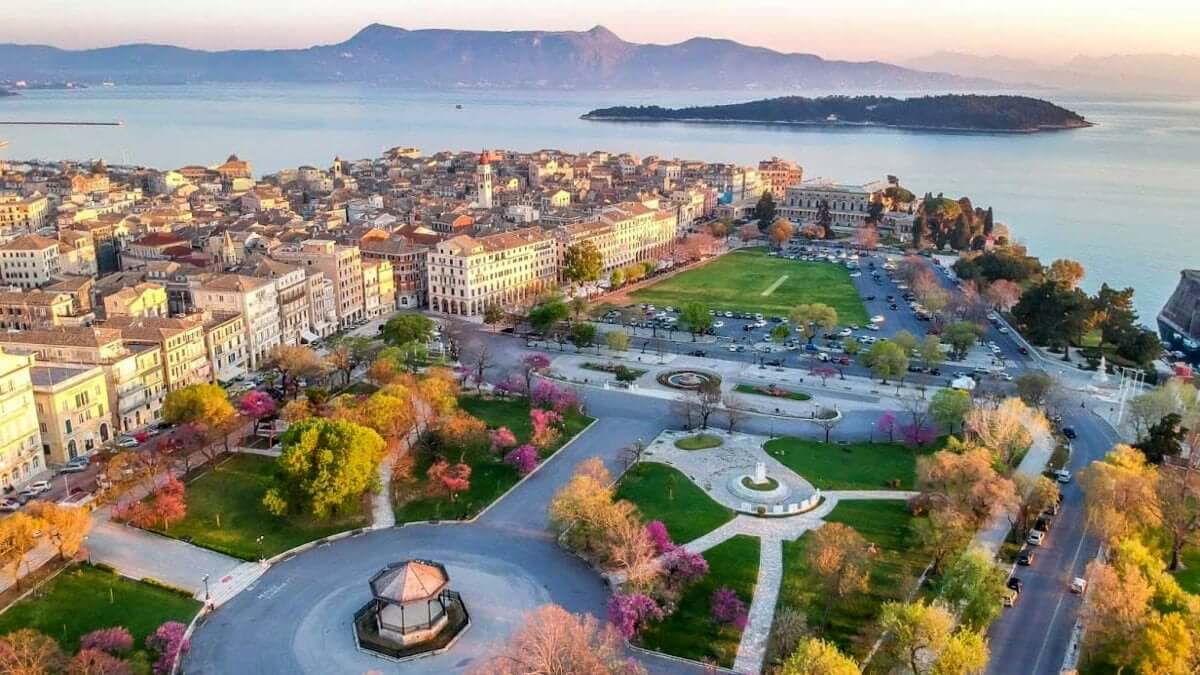
Observe how public space is used differently across eras (defense vs recreation). Discuss cricket as a cultural loan.
☕ Liston
The most photographed spot, work of French engineer Mathieu de Lesseps (father of the Suez Canal builder) during the 2nd French Rule (1807-1814). Designed on the model of the Rue de Rivoli in Paris. Originally a French barracks, later the British added floors for hotels. According to legend, only nobles listed in the “List” (Libro d’ Oro) were allowed to walk on this street.
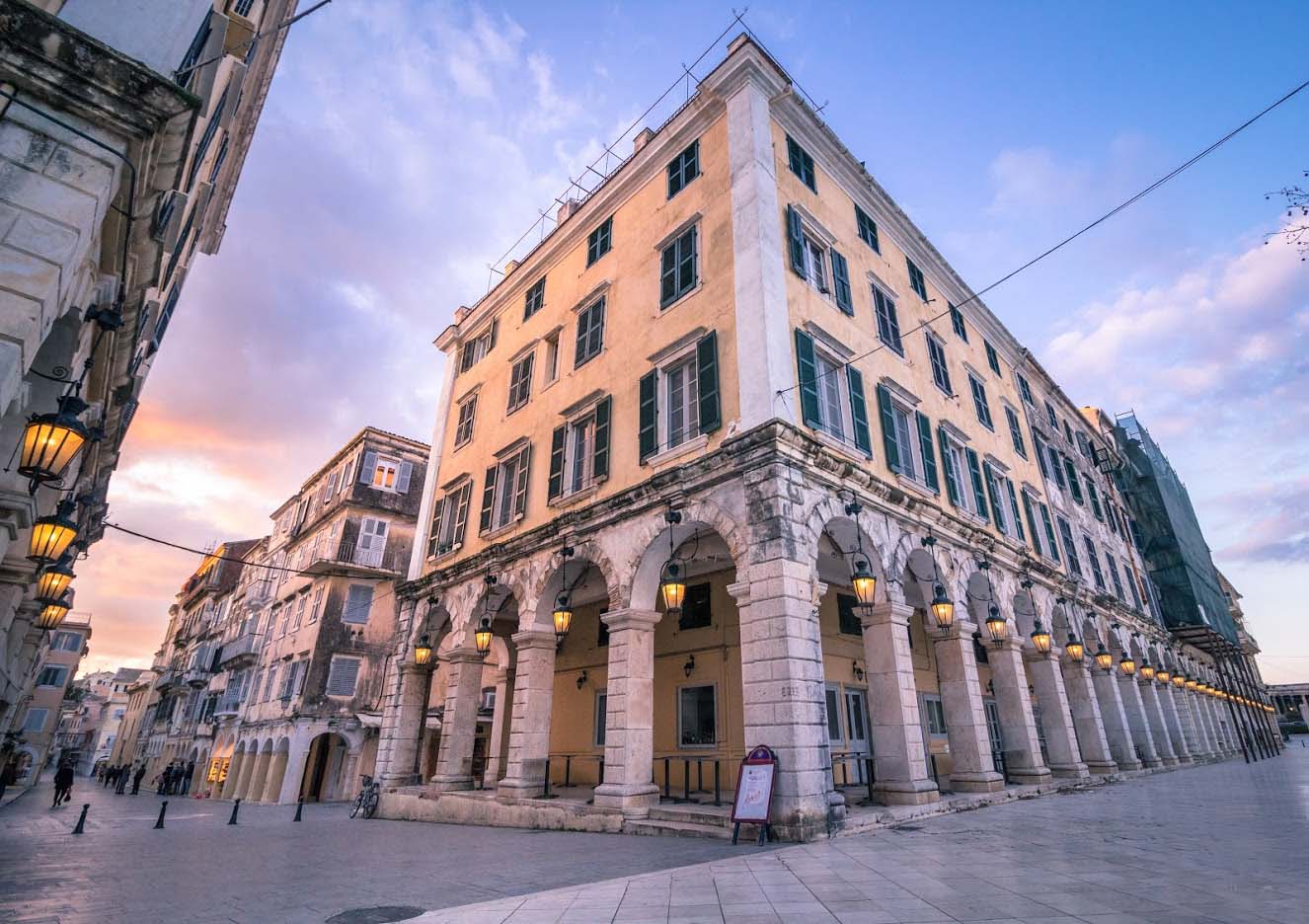
Discuss social stratification of past eras. How do we feel today that everyone has access to public spaces?
🌿 Mon Repos Estate & Palace
A lush park of 258 acres with centenarian trees. In the center dominates the neoclassical villa, work of Corfiot architect Ioannis Chronis, built in 1831 as the summer residence of British High Commissioner Adams. Later used by the Greek royal family and during the Occupation by Italian commander Parini. In the forest there are ancient ruins (such as the temple of Kardaki), as the ancient city was located here.
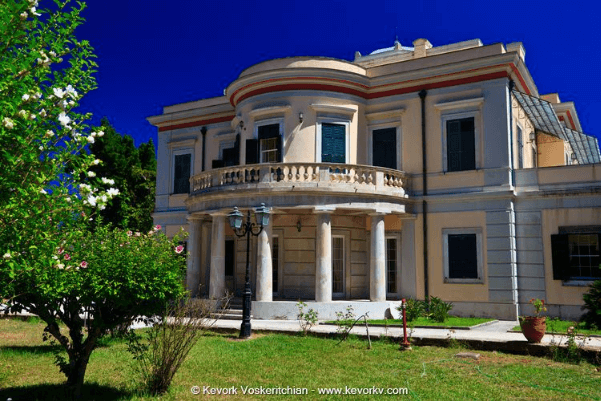
Ideal for Environmental Education (flora study) combined with Archaeology (searching for ancient ruins in the forest).
✈️ Kanoni & Mouse Island (Pontikonisi)
The absolute “landmark” of Corfu, where the ancient city was located. The name “Kanoni” comes from an artillery battery set up by the French in 1798 (a cannon is preserved). The view is magnificent towards the Vlacherna monastery (17th century) and Mouse Island with the chapel of Pantokrator. According to legend, Mouse Island is the ship of the Phaeacians turned to stone by Poseidon.
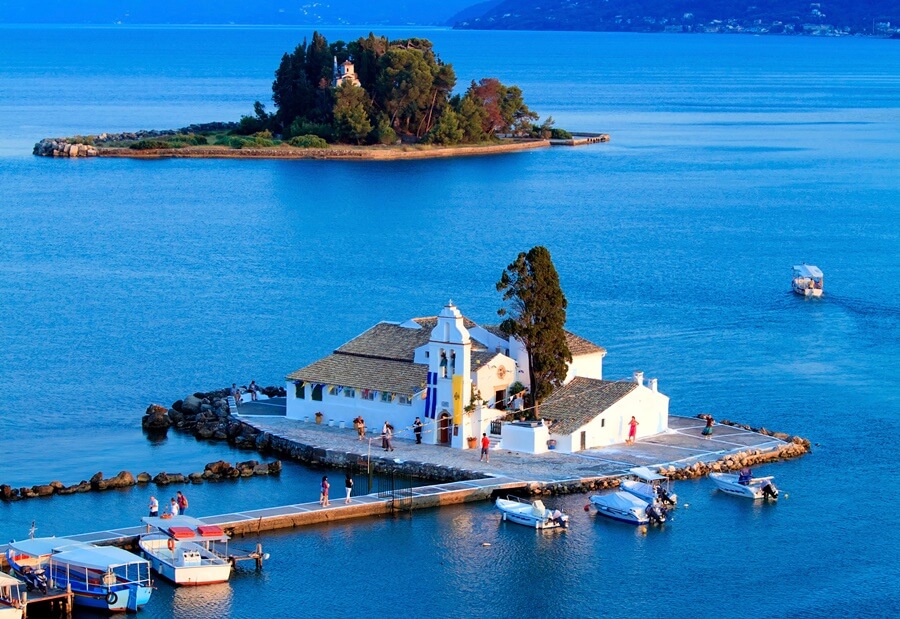
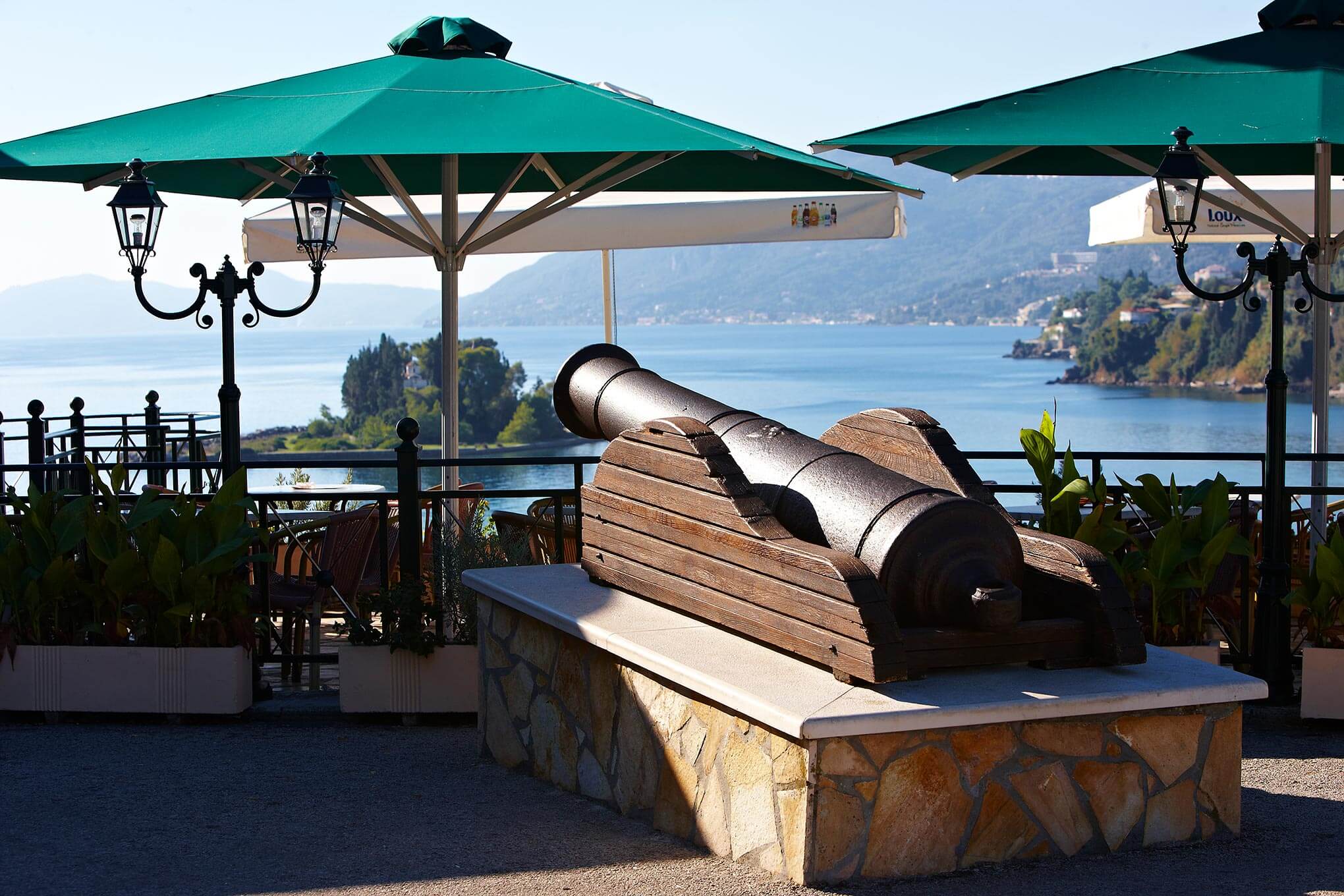
Connect the landscape with the Odyssey and the island of the Phaeacians. Also discuss tourism as a main pillar of the economy.
⛪ Church of St. Spyridon (Patron Saint)
It is the most important Byzantine monument, built in Single-aisled Basilica style. It stands out for its tower-like bell tower, the impressive iconostasis made of Parian marble, and the 17 gold-plated panels (paintings) on the ceiling with scenes from the Gospels. The Saint’s relic is kept in a silver casket inside a crypt. A multitude of visitors come for pilgrimage and vows.
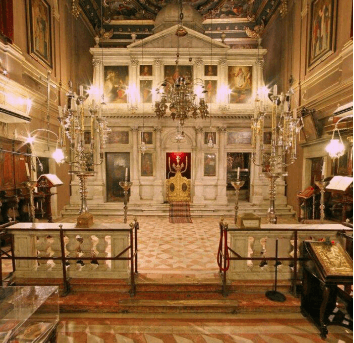
Explore the relationship between religion and local identity. Why does almost every family in Corfu have a Spiros?
🖼️ Antivouniotissa Byzantine Museum
Housed in the church of Panagia Antivouniotissa (late 15th century), a timber-roofed basilica with the characteristic Corfiot exonarthex. The interior is evocative, with “wallpaper” on the walls and stone gravestones on the floor. The icons (15th-19th century) highlight Corfu’s role after 1664, when many painters of the Cretan School took refuge on the island. It was donated in 1979 by owner families to become a museum.
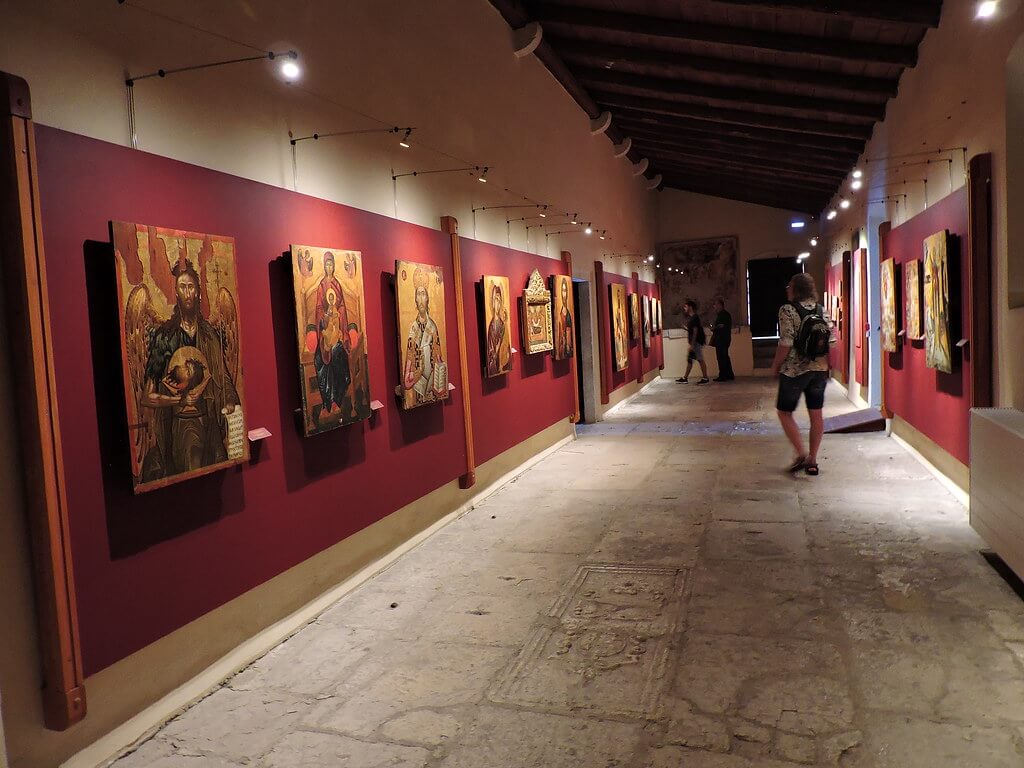
Search for differences between Byzantine iconography and Western painting. What is the Cretan School?
🙏 Metropolitan Church of Spiliotissa
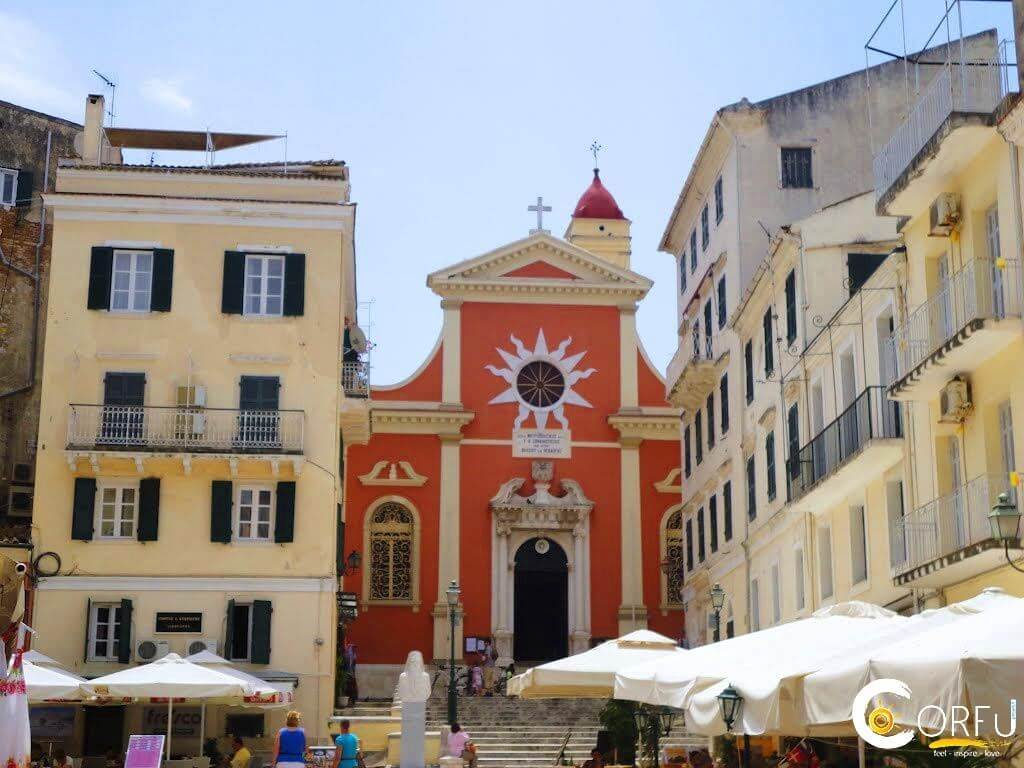
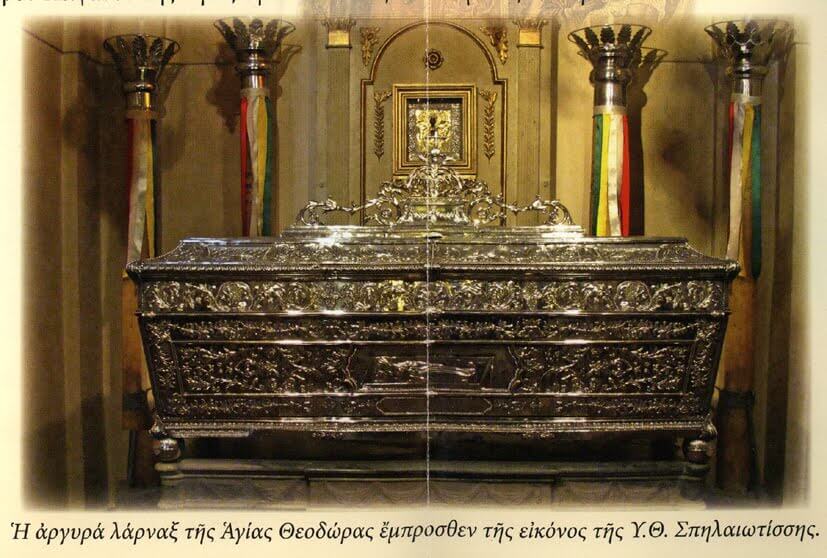
Three-aisled basilica with Renaissance exterior elements, built in 1577 on the site of an older church of St. Vlasios. It is also dedicated to St. Theodora the Augusta, the Empress who restored the icons. Her relic is kept in a silver casket and is carried in procession on the Sunday of Orthodoxy. Remarkable are the iconostasis and the hagiographies of Heptanesian style.
Historical review of Iconoclasm. What was the role of St. Theodora? Why were relics important for cities?